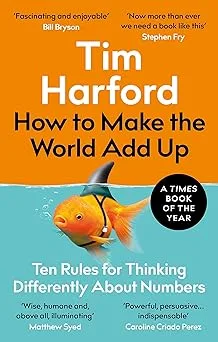
How to Make the World Add Up: Ten Rules for Thinking Differently About Numbers
Tim Harford presents a framework for interpreting the flood of data encountered in daily life, moving beyond the idea that statistics are inherently deceptive. He outlines ten rules for statistical literacy, such as checking personal emotional reactions to a headline, demanding context for isolated figures, and scrutinizing how categories are defined. The text details the importance of the "bird's eye view" provided by large-scale data while acknowledging the hidden biases in algorithms and the necessity of scientific curiosity. By examining historical examples and modern misinformation, Harford demonstrates how numbers function as a tool for clarity rather than just a means of manipulation.
This book is for anyone who feels overwhelmed by conflicting news reports or data-heavy arguments. Readers gain practical techniques to identify cherry-picked information and understand how sampling errors occur. Instead of adopting a cynical view toward every chart or percentage, the reader learns to ask specific questions about the origin and intent of a dataset. This knowledge allows for a more accurate assessment of global trends and personal risks, turning passive consumption into active, skeptical analysis.
- Published
- 2020
- Language
- EN