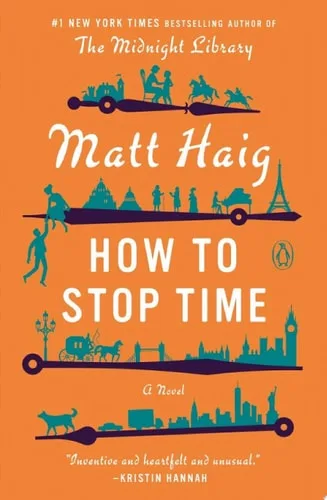
Tom Hazard appears to be an ordinary forty-one-year-old history teacher in London, but he actually possesses a rare physiological condition that causes him to age at a drastically slowed rate. Born in the late sixteenth century, Tom has lived through the Elizabethan era, seafaring voyages with Captain Cook, and the jazz clubs of the 1920s. He belongs to the Albatross Society, a secret organization that protects people like him under one strict rule: they must never fall in love, as emotional attachments expose their existence to the modern world.
This novel serves readers who enjoy historical fiction blended with speculative premises. It appeals to those interested in the logistical and psychological burdens of longevity rather than the glamour of immortality. Readers find a narrative that examines how memory functions over centuries and the difficulty of maintaining a static identity while the world changes. By the end, the reader considers whether a life defined by safety and permanence is worth more than a short life defined by human connection.
Insights from How to Stop Time
“The first rule is don't fall in love. There are other rules, but that's the main one.”
Living forever sounds like a dream until you realize you have to watch everyone die. Tom survives centuries but loses his heart every single time.
History feels like a flat line when you have seen it all. Tom meets Shakespeare and plays the lute. It is just another Tuesday for him.
“To stay young you have to live in the past.”
Safety usually means hiding. Tom spends centuries avoiding real life just to stay alive. It is a lonely way to exist.
Grief does not shrink over hundreds of years. Tom still carries the weight of Rose centuries later. Time does not heal everything.
- Published
- 2017
- Publisher
- Penguin US
- ISBN
- 9780525522881
- Language
- EN