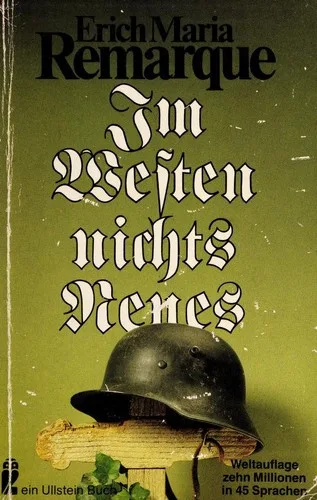
The story follows Paul Bäumer, a young German soldier who enlists in World War I alongside his classmates after listening to their teacher’s patriotic speeches. Once at the front, the romanticized version of war disappears, replaced by the mechanical slaughter of trench warfare. Paul describes the physical reality of gas attacks, starvation, and constant shelling while bonding with his seasoned comrade, Katczinsky. Between battles, the narrative focuses on the stripping away of individual identity as the boys become numb machines focused solely on survival. When Paul returns home on leave, he finds he can no longer communicate with civilians who view the conflict through a lens of national glory, highlighting the total disconnection between the soldiers and the society that sent them to fight.
Students and readers of historical fiction find this account useful for understanding the psychological transition from civilian to combatant. It provides a direct look at the industrial nature of modern combat and the collapse of traditional moral structures under extreme duress. Readers walk away with a specific understanding of the "lost generation" concept, observing how the survivors of the conflict remained mentally tethered to the trenches even after the gunfire ceased. It serves as a documentary-style record of how trauma creates an unbridgeable gap between those who fought and those who remained behind.
Deep, contemplative and thought-provoking; a moderate read.
Best for readers like The Wisdom Collector. Which reader are you?
- Published
- 1928
- Language
- EN