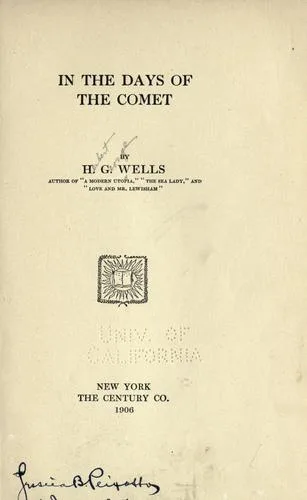
In Edwardian England, William Leadford is a working-class clerk consumed by resentment toward the wealthy upper class and his unfaithful lover, Nettie. As international tensions lead toward a global war, a mysterious comet enters Earth’s atmosphere and releases a green gas that alters the chemical composition of the human brain. This "Great Change" instantly replaces human aggression, jealousy, and greed with clarity and universal empathy. The story tracks how the characters abandon their private vendettas to rebuild society into a borderless, collective utopia based on rational cooperation rather than conflict.
Readers of classic speculative fiction look to this novel for an early example of how scientific anomalies can serve as a catalyst for social reform. It appeals to those interested in socialist theory and the transition from Victorian social hierarchies to communal living. The reader walks away from the text with a vision of a world where human nature is fundamentally reprogrammed by external forces. It provides a contrast to typical apocalyptic narratives by presenting a cosmic event that heals civilizational flaws instead of destroying them.
- Published
- 1906
- Language
- EN