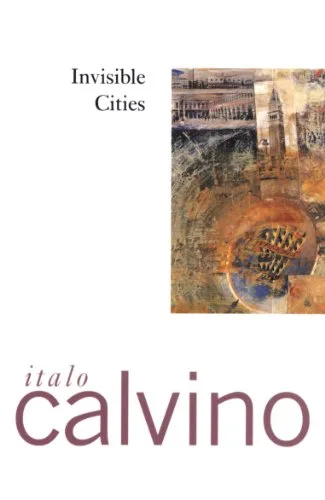
In a garden within the Mongol dynasty, the aging ruler Kublai Khan listens to Marco Polo describe the far-flung outposts of an expanding empire. The text consists of fifty-five prose poems detailing imaginary metropolises, categorized into rubrics like hidden cities, trading cities, and cities and eyes. Polo depicts places where residents live in spiderwebs suspended between cliffs, cities built entirely of water pipes, and identical towns that repeat across the landscape. Eventually, Polo reveals that every description is a refracted meditation on his native Venice, using architectural metaphors to analyze how memory, language, and desire shape urban structures.
This book serves readers interested in semiotics, urban planning, and the intersection of geography and psychology. Architects and social scientists read it to understand how physical spaces influence human behavior and how a city exists primarily as a collection of signs. The reader finishes the book with a framework for observing their own environment not as a fixed grid of stone and steel, but as a shifting catalog of symbols and historical layers. It provides a vocabulary for discussing the tension between an idealized city plan and the chaotic reality of human habitation.
Deep, contemplative, open-ended and thought-provoking; a moderate read.
Best for readers like The Literary Connoisseur. Which reader are you?
- Published
- 1972
- Language
- EN