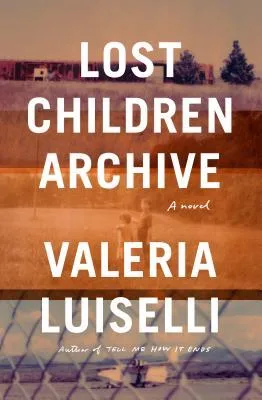
A family of four travels by car from New York City to the Chiricahua Mountains in Arizona. The father intends to document the history of the Apache people, while the mother, a radio journalist, investigates the disappearance of migrant children in the United States borderlands. As the parents’ marriage fractures, their two children begin to interpret the adult world through sound recordings, old maps, and a polaroid camera. The narrative shifts from the mother’s perspective to the young son’s, merging their road trip with the concurrent experiences of unaccompanied minors crossing the southern border.
Researchers of modern American history and readers interested in experimental narrative structures will find a study of how memory is archived. The text provides a look at the intersection of migration policy, indigenous history, and familial disintegration. Readers gain an understanding of the relationship between auditory documentation and emotional preservation. It offers a framework for visualizing how national political crises influence the internal dynamics and imaginative language of a family unit during a period of transition.
Deep, inward-looking, open-ended and thought-provoking; a moderate read.
Best for readers like The Wisdom Collector. Which reader are you?
- Published
- 2019
- Language
- EN