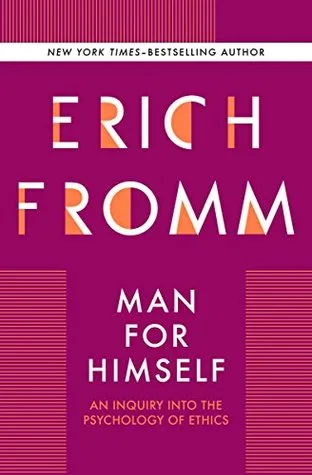
In this work, Erich Fromm argues that psychology and ethics are inseparable, asserting that moral norms must be rooted in the objective requirements of human nature rather than external authority. He introduces the concept of the productive orientation, a state where an individual uses their powers to realize their inherent potential through reason and love. Fromm contrasts this with non-productive character types, such as the receptive, hoarding, exploitative, and marketing orientations. He analyzes how the modern "marketing personality" views the self as a commodity to be sold, leading to alienation and a loss of genuine identity.
Students of humanistic psychology and social theory read this book to understand the link between character structure and moral action. Readers gain a framework for distinguishing between irrational authority, which relies on fear, and rational authority, based on competence. The text provides a lens for evaluating one’s own life choices through the concepts of "selfishness" versus "self-love," proposing that true care for others begins with a healthy affirmation of one’s own existence. The audience leaves with a definition of virtue based on the psychological growth of the individual.
- Published
- 1947
- Language
- EN