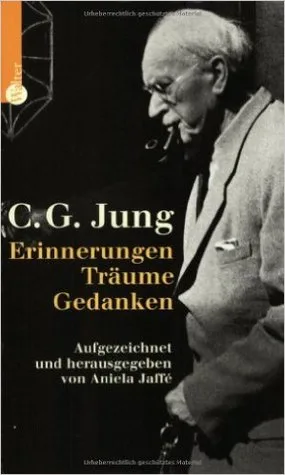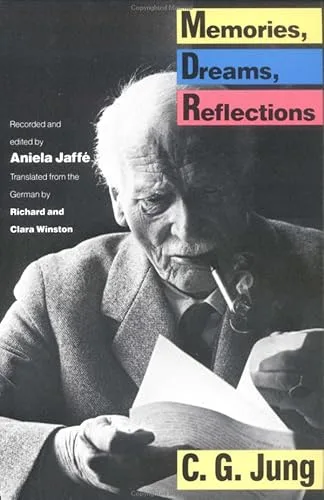
In this autobiography, C.G. Jung focuses on his internal spiritual and psychic development rather than external historical events. He recounts his childhood visions, his collegiate interest in the occult, and his subsequent professional collaboration and eventual split with Sigmund Freud over the nature of the libido. Jung documents the formation of his central psychological frameworks, including the collective unconscious, archetypes like the anima and animus, and the process of individuation. The narrative provides detailed accounts of his dreams and the spontaneous imagery that emerged during his period of self-experimentation.
Students of analytical psychology and individuals interested in the mechanics of the unconscious read this work to observe a practitioner applying his own theories to his life. The text serves as a primary source for understanding how personal experience informs scientific hypothesis. Readers walk away with a specific perspective on the relationship between myth, religion, and the human personality. It offers a technical look at how a single mind categorizes internal chaos into a structured system of psychological types and symbols.
- Published
- 1962
- Language
- EN