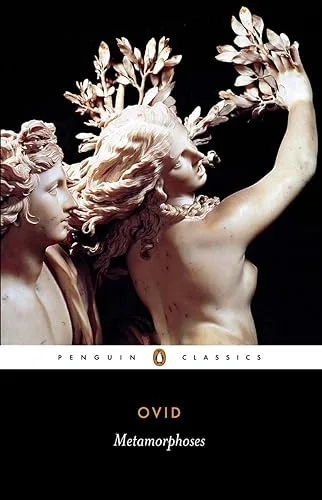
Ovid’s hexameter narrative tracks the history of the world from its chaotic origins to the assassination of Julius Caesar. The text catalogs over two hundred myths linked by the physical transition of bodies into new shapes. Characters like Daphne harden into laurel trees to escape Apollo, while Narcissus dissolves into a flower by a pool and Arachne shrinks into a spider after a weaving contest with Minerva. These stories document how trauma, divine retribution, and intense desire strip humans of their original forms, replacing flesh with stone, foliage, or animal hide.
Students of classical literature and artists use this text as a primary source for Greco-Roman mythology. It provides a technical framework for understanding the genealogies and rivalries of the Olympian gods. Readers gain a detailed inventory of the imagery that has informed Western painting and sculpture for centuries. By the final book, the audience understands how ancient Mediterranean cultures connected cosmic creation to the political rise of the Roman Empire through a continuous chain of biological and supernatural change.
Deep; a demanding read.
Best for readers like The Deep Diver. Which reader are you?
- Language
- EN