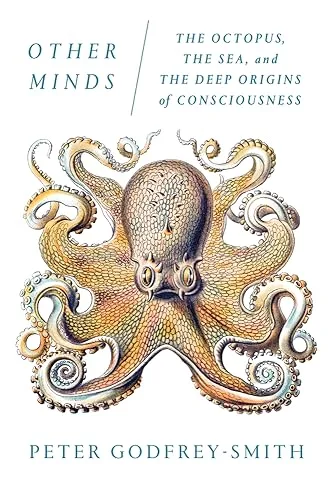
Peter Godfrey-Smith traces the origins of subjective experience through the evolution of biological structures. He argues that consciousness did not emerge as a sudden spark but developed incrementally through physical innovations like bilateral symmetry, nervous systems, and specialized sensing organs. Moving from glass sponges and soft corals to shrimp, octopuses, and vertebrates, the book details how active agency and the ability to distinguish self-generated motion from external stimuli built the framework for a felt inner life. This shifts the focus from abstract cognitive processing to the concrete realities of animal physiology and environmental interaction.
This book serves readers interested in evolutionary biology and the philosophy of mind who want to move beyond human-centric models of intelligence. Those who study neurobiology or marine ecology will find a materialist explanation for how sentience is rooted in cellular coordination. The reader concludes the text with a functional understanding of how different body plans produce unique ways of inhabiting the world. They gain a scientific perspective on the transition from simple irritability in cells to the complex behavioral sophistication found across the animal kingdom.
- Published
- 2020
- Language
- EN