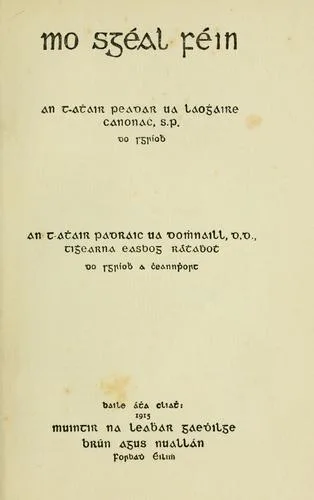
Published in 1910, this autobiography details the life of Peadar Ó Laoghaire from his childhood in the Gaeltacht of Muskerry through his career as a priest during the nineteenth century. The narrative chronicles the Great Famine and its immediate social aftermath in County Cork. Ó Laoghaire focuses on the decline of the Irish language in daily life and his subsequent efforts to revitalize it by writing in the common vernacular, "caint na ndaoine," rather than archaic literary forms. He describes the local customs, agricultural practices, and religious traditions that defined his upbringing.
This book serves historians of rural Ireland and linguists investigating the transition from Old Irish styles to Modern Irish prose. Readers gain a specific understanding of how the Famine influenced cultural identity and language shift in the south of the country. By following the author’s experiences, students of the Gaelic Revival learn why the movement prioritized the speech of native speakers as the cornerstone for a new national literature. It provides a firsthand record of a vanishing social structure.
- Published
- 1910
- Language
- EN