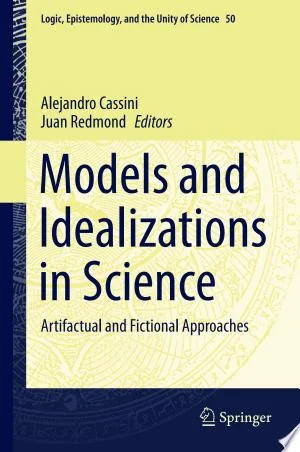
This volume examines the ontological and functional roles of scientific models, focusing specifically on the tension between artifactualism and fictionalism. The authors analyze whether models should be treated as fictional entities, akin to literary characters, or as physical and conceptual epistemic artifacts designed for pragmatic use. By investigating how scientists employ idealizations to simplify complex physical systems, the text addresses whether models represent reality or serve as non-representational tools for gaining epistemic access to phenomena. The discussion covers instrumentalism, inferentialism, and the specific ways idealizations distort reality to produce scientific knowledge.
Philosophers of science and researchers in epistemology read this work to clarify the nature of scientific representation and model-building. Readers gain a technical understanding of the differences between viewing a model as a depiction of a system versus an autonomous tool for knowledge production. The book provides the conceptual vocabulary needed to distinguish between the ontology of a model and its practical function in a laboratory or theoretical setting. It equips scholars to evaluate how idealized assumptions contribute to scientific realism and the reliability of scientific explanations.
- Published
- 2021
- Publisher
- Springer Nature
- ISBN
- 9783030658021
- Language
- EN