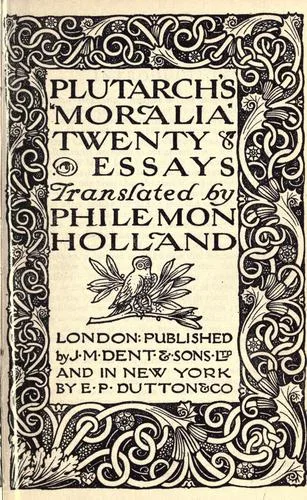
Plutarch’s Moralia is a vast collection of seventy-eight essays and transcribed speeches concerning Greek and Roman social customs, ethical philosophy, and natural science. The text addresses specific behavioral inquiries, such as how to distinguish a flatterer from a true friend and the proper methods for restraining anger. It includes theological debates regarding the cessation of oracles, detailed observations on the physical properties of the moon, and paradoxes concerning the intelligence of animals. These writings serve as a record of Middle Platonism, applying ancient logic to daily human interactions and religious rituals.
Students of classical history and moral philosophy read this collection to understand the practical application of Stoic and Platonic ethics in the ancient Mediterranean world. The text provides a framework for evaluating personal character and civic duty through historical anecdotes. Readers walk away with specific rhetorical strategies for debate and a comparative perspective on how ancient societies managed psychological health and social etiquette. It functions as a manual for those seeking to moderate their impulses through rational self-examination.
Deep, contemplative and open-ended; a demanding read.
Best for readers like The Wisdom Collector. Which reader are you?
- Published
- 1500
- Language
- EN