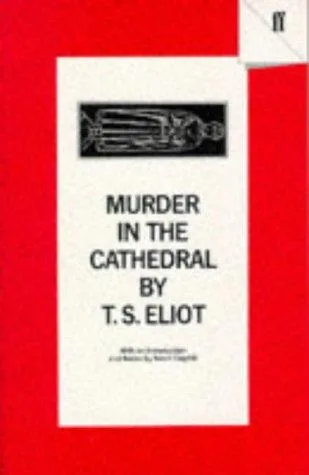
T. S. Eliot’s verse drama depicts the final days of Thomas Becket, the Archbishop of Canterbury, following his seven-year exile in France. Upon his return to England in 1170, Becket faces a fatal conflict between his religious duties and the political demands of King Henry II. The narrative centers on Becket’s internal struggle against four tempters who offer him physical safety, political influence, and the spiritual pride of martyrdom. Through the rhythmic commentary of a chorus of local women, the play examines the tension between temporal law and divine will, culminating in Becket's assassination within the cathedral.
This work appeals to readers of historical drama and liturgical literature who value precise, rhythmic language. It attracts those interested in the philosophical distinction between acting and suffering, as well as the historical friction between church and state. Readers finish the text with a clear understanding of the psychological preparations for martyrdom and the specific political tensions of medieval Christendom. The play serves as a study in how an individual reconciles personal ego with a commitment to a perceived higher authority under the threat of state violence.
- Published
- 1934
- Language
- EN
![The United States in Literature [with three long stories] -- Seventh Edition](https://kwbjoqloympvbpzbrfja.supabase.co/storage/v1/object/public/scan-images/catalog/f48162c6-7eb5-41ec-933b-9c4218489c7d-full.webp)