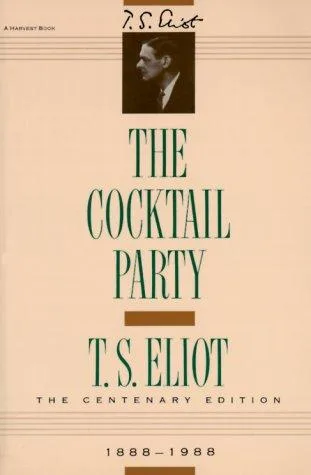
The play begins at a London flat where Edward Chamberlayne attempts to hide the fact that his wife, Lavinia, has recently left him. Among the guests is an unidentified guest who later reveals himself as Sir Henry Harcourt-Reilly, a psychiatrist who orchestrates the couple’s reconciliation. The plot follows the Chamberlaynes as they confront their emotional sterility and the failure of their extramarital affairs. Meanwhile, their friend Celia Coplestone seeks a different path, choosing a rigorous life of spiritual service and eventual martyrdom in a foreign land. Through these intersecting lives, the narrative contrasts the mundane requirements of a functioning social marriage with the demanding necessity of a religious vocation.
Readers interested in verse drama and Christian existentialism study this work to understand how individual choice dictates social and spiritual outcomes. The text attracts those looking for an analysis of human isolation and the difficulty of truly knowing another person. By following the sharp dialogue and clinical interventions of the psychiatrist, the reader walks away with a framework for distinguishing between the quiet endurance of domestic life and the sacrificial nature of saintliness. It provides a technical look at how formal poetry can be integrated into the modern drawing-room setting to discuss atonement.
- Published
- 1950
- Language
- EN

![The United States in Literature [with three long stories] -- Seventh Edition](https://kwbjoqloympvbpzbrfja.supabase.co/storage/v1/object/public/scan-images/catalog/f48162c6-7eb5-41ec-933b-9c4218489c7d-full.webp)