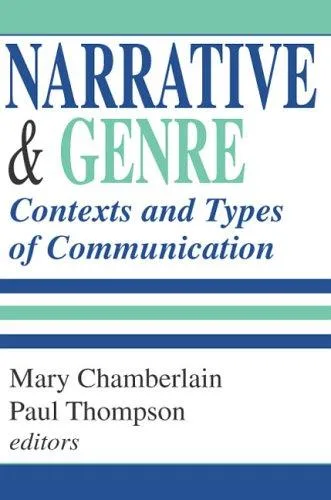
Narrative and Genre examines the structural patterns individuals use to organize their life stories, arguing that personal memory is filtered through established literary and cultural frameworks. Mary Chamberlain and Paul Thompson gather several oral history case studies to demonstrate how autobiographical accounts rely on specific genres—such as tragedy, romance, or epic—to provide meaning to past experiences. The contributors analyze how social class, gender roles, and national myths dictate the templates people choose when narrating their identities. By focusing on the intersection of sociology and literature, the text identifies how subjective truth is constructed through these inherited narrative forms rather than through objective recall.
This text serves oral historians, sociologists, and biographers who study the mechanics of personal testimony. Readers learn to identify the subconscious scripts that shape interview data and life writing. It provides a methodological toolkit for distinguishing between factual chronologies and the cultural myths that narrators use to justify their life choices. Researchers walk away with a clearer understanding of how to interpret the silence, exaggeration, and recurring motifs found in human memory, moving beyond simple transcription to achieve a rigorous analysis of how the self is performed through language.
- Published
- 1997
- Language
- EN