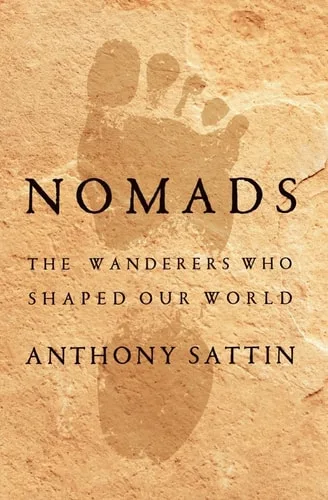
Anthony Sattin reconstructs human history by centering mobile societies rather than permanent settlements. He argues that the tension between "people of the path" and "people of the place" defines our social evolution. The narrative examines how groups like the Scythians, Mongols, and Xiongnu functioned as vital conduits for technological innovation, linguistic spread, and international trade. By analyzing archaeological evidence and ancient texts, Sattin demonstrates that nomadic mobility prevented regional stagnation and forced empires to adapt, suggesting that the drive to wander is a fundamental human trait suppressed by modern borders.
History enthusiasts and students of anthropology will value this perspective for its rejection of city-centric progress narratives. Readers gain a framework for understanding how migration and seasonal movement influenced governance, religion, and military tactics. The book provides a detailed look at social structures that prioritize flexibility over ownership, leaving the reader with a clearer grasp of why mobile cultures were historically viewed as threats to state control. It clarifies the specific ways that non-sedentary populations built the foundations of our modern interconnected world.
Insights from Nomads The Wanderers Who Shaped Our World
“Civilization is a story told by the winners who stayed at home.”
Historians usually focus on cities and walls. They forget that the people moving between them were the ones sharing ideas. Progress happened because of the wanderers.
Nomads were the original internet. They carried seeds and stories across entire continents. They kept the world connected before roads ever existed.
“The wall is a symbol of fear.”
Settled people view fences as safety. Nomads see them as a lack of trust. It changed how I look at property lines.
We think of Genghis Khan only as a destroyer. He actually created a massive zone of religious freedom and safe trade. Stability came from the saddle.
- Published
- 2022
- Publisher
- National Geographic Books
- ISBN
- 9781324035459
- Language
- EN
Readers also enjoyed