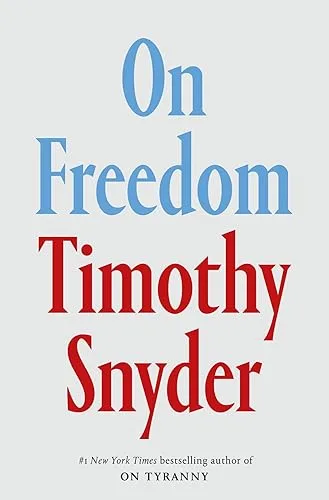
Timothy Snyder argues that modern society has misunderstood freedom by viewing it purely as the absence of government interference. He shifts the definition toward positive liberty, which he describes as the active capacity to choose one’s future through the support of robust public institutions. Drawing on history and political philosophy, he identifies five pillars—sovereignty, unpredictability, mobility, factuality, and solidarity—that allow individuals to exercise true agency. The text examines how systemic failures in healthcare, education, and digital privacy erode the practical ability to act freely, even in established democracies.
Readers interested in the intersection of history and civic theory use this framework to move beyond reactionary politics. The book serves people who want a clear vocabulary for defending democratic structures against authoritarianism and social fragmentation. By the end, a reader understands how collective investments in public goods create the necessary conditions for individual independence. It provides a blueprint for building a society where liberty is a practiced reality rather than a theoretical absence of constraint.
- Published
- 2025
- Language
- EN
More by Timothy Snyder
See all →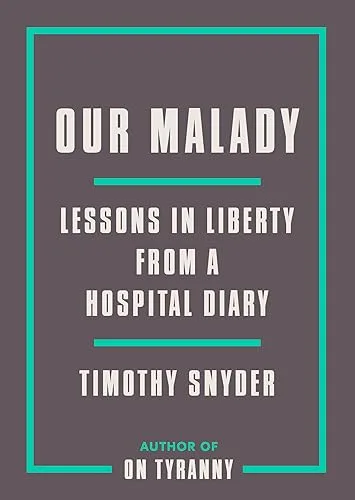


Readers also enjoyed