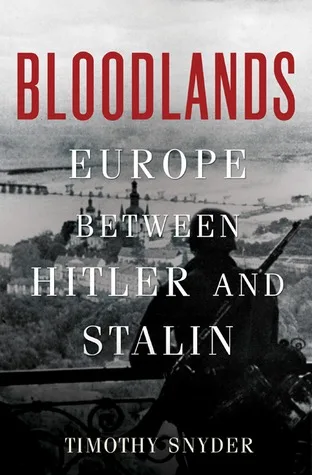
Timothy Snyder examines the deliberate mass killing programs executed by the Nazi and Soviet regimes between 1933 and 1945. He defines the bloodlands as a specific geographic region spanning Poland, Ukraine, Belarus, the Baltic States, and western Russia. Within this territory, fourteen million non-combatants were murdered not as collateral damage of war, but through intentional policies like the Holodomor, the Great Terror, the Holocaust, and the German starvation of Soviet prisoners of war. Snyder argues that these two totalitarian systems functioned as a single interactive mechanism of destruction.
Historians and students of the mid-twentieth century read this to understand the logistical similarities and geographic overlaps between Stalinist and Nazi violence. The text moves beyond national or ethnic silos to provide a regional perspective on state-sponsored homicide. Readers walk away with a precise accounting of how political geography and resource management fueled genocide and mass execution. It offers a factual framework for comparing the mechanics of various atrocities that occurred simultaneously across Eastern Europe.
- Published
- 2010
- Language
- EN
More by Timothy Snyder
See all →
Readers also enjoyed