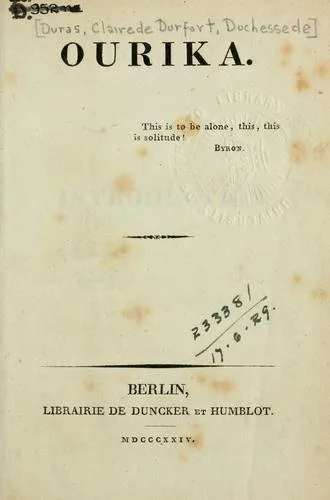
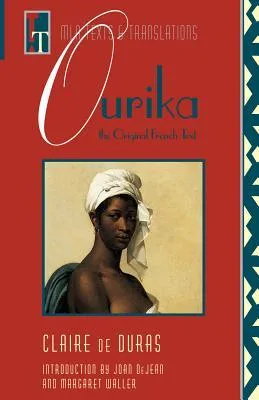
Ourika follows the life of a young Senegalese girl brought to France during the late eighteenth century after being saved from the slave trade by the Governor of Senegal. Raised in an aristocratic household by the benevolent Madame de B., Ourika receives a high-society education in literature, music, and art. Her crisis begins when she overhears a conversation revealing that her race and social status prevent her from ever marrying within her peer group. As the French Revolution unfolds, Ourika faces internal isolation, realizing she belongs neither to the elite world that shaped her nor to the marginalized people she resembles physically.
Students of French history and readers of early abolitionist literature value this text for its specific portrayal of double consciousness and social displacement. The narrative provides a historical look at the intersection of gender, race, and class in pre-revolutionary Paris. Readers walk away with an understanding of how systemic exclusion functions within an enlightened society and how psychological alienation affects the individual sense of identity. It serves as a study of the limitations of social mobility when confronted with rigid colonial prejudices.
- Published
- 1824
- Language
- EN
![उस रात के बाद [Us Raat Ke Baad]](https://kwbjoqloympvbpzbrfja.supabase.co/storage/v1/object/public/scan-images/catalog/53673b08-18d0-4f03-8e5f-04a98899e36f-full.webp)