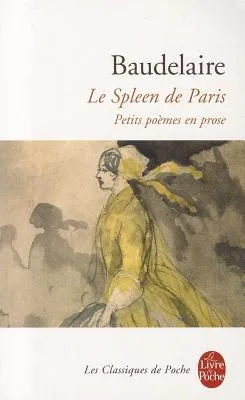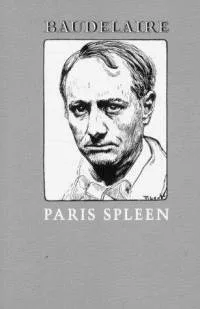
Charles Baudelaire’s posthumous collection consists of fifty prose poems capturing the moral and physical landscape of mid-nineteenth-century Paris. The text rejects traditional verse structures to document the friction between the individual and the industrializing city. Baudelaire records encounters with street performers, beggars, and the elderly, framing these figures against the backdrop of Haussmann’s urban reconstruction. He introduces the concept of the flâneur—a detached observer who finds beauty in the grotesque and the ephemeral. Through vignettes regarding intoxication, solitude, and the cruelty of random social interactions, he examines how modern urban life fragments the human soul.
This book serves students of French literature and readers interested in the evolution of modernism. It attracts those who seek an unvarnished look at city life and the psychological toll of mass society. Readers gain a framework for understanding the aesthetic of the ugly and the fleeting nature of time. The collection provides a technical model for the prose poem genre, showing how musicality functions without rhyme. By the end, a reader develops a different perspective on the mundane details of the urban environment and the melancholic state defined as spleen.
- Published
- 1857
- Language
- EN