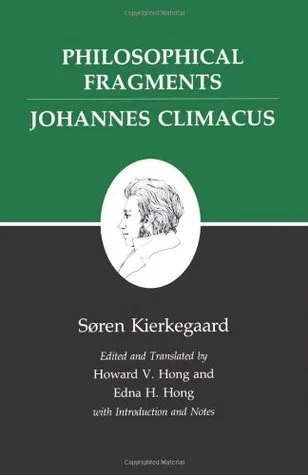
In this work, pseudonymous author Johannes Climacus examines the structural differences between Socratic recollection and the Christian encounter with divine truth. The text questions whether truth can be learned through human reason or if it requires a miraculous intervention from an eternal teacher. Climacus identifies the "Absolute Paradox" as the moment where human intellect reaches its limit when confronting the incarnation of God in time. By comparing the Greek model of innate knowledge with the concept of a "Moment" of radical change, the book outlines the psychological state of offense versus the leap of faith.
Theology students and philosophers study this text to understand the epistemological divide between rationalism and religious belief. Readers find a rigorous breakdown of how subjectivity functions when logical proofs for existence fail. One walks away with a clear framework for distinguishing between intellectual assent and the individual commitment required to bridge the gap between the finite and the infinite. The volume serves those seeking to map the boundaries of what the human mind can derive on its own versus what must be received.
- Published
- 1844
- Language
- EN