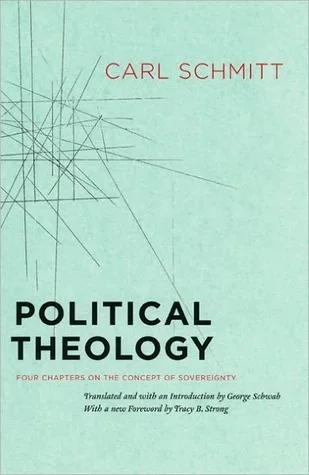
Political Theology: Four Chapters on the Concept of Sovereignty
Carl Schmitt defines sovereignty through the capacity to decide on the state of exception, asserting that the legal order rests upon a foundation that it cannot itself regulate. He argues that all significant concepts of the modern theory of the state are secularized theological notions. By tracing the historical shift from divine transcendence to immanent rationality, Schmitt critiques liberal parliamentarism and legal positivism for their inability to account for the core of political authority. The text centers on the structural analogy between the miracle in theology and the exception in jurisprudence.
Legal theorists and students of political philosophy study this work to understand the origins of executive power and the limits of constitutionalism. Readers gain a framework for analyzing how governments suspend normal laws during crises and why technical administration cannot replace political decision-making. Those interested in the tension between democracy and dictatorship use these chapters to examine the foundational legitimacy of the state. The book provides a rigorous vocabulary for discussing the authority that exists prior to and outside of the written legal code.
- Published
- 1922
- Language
- EN