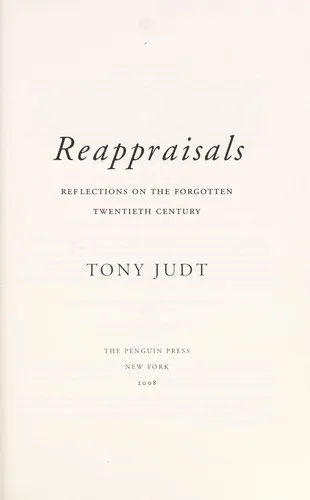
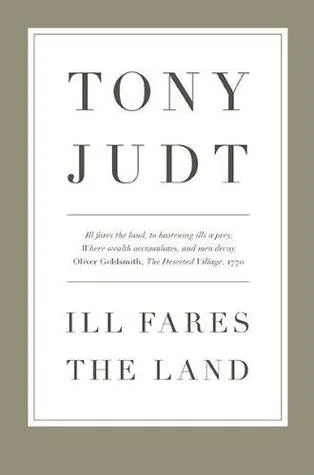
In this collection of twenty-four essays, Tony Judt evaluates the intellectual history of the twentieth century by examining how public memory often distorts past political realities. He analyzes the roles of prominent thinkers like Albert Camus, Primo Levi, and Hannah Arendt to illustrate the moral dilemmas faced during the rise of totalitarianism and the Cold War. Judt argues that the contemporary world has entered an era of forgetting, where the collapse of the Soviet Union led to a misguided dismissal of the state's role in social stability. He critiques the shift toward neoliberal economics and the failures of American foreign policy in the Middle East, connecting these modern developments to a loss of historical consciousness regarding the welfare state.
Academic readers and students of European history turn to this text to understand the evolution of political ideologies and the responsibility of the public intellectual. It serves those interested in the intersections of social democracy and international relations. The reader gains a refined framework for interpreting current geopolitical conflicts through the lens of mid-century philosophical debates. By the end, one possesses a clearer view of why historical literacy is necessary to prevent the repetition of previous governance errors and how specific intellectual legacies continue to shape modern policy discourse.
- Published
- 2008
- Language
- EN
More by Tony Judt
See all →
Readers also enjoyed