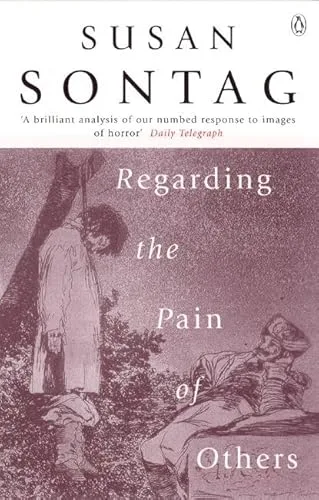
Regarding the Pain of Others
Twenty-five years after writing On Photography, Susan Sontag re-evaluates how spectators consume images of war, disaster, and atrocities. She challenges the assumption that constant exposure to graphic violence inevitably leads to compassion fatigue or moral numbness. Instead, she analyzes how the framing of a photograph influences a viewer's political allegiance and their sense of grievance. Sontag examines the history of war imagery—from Goya’s etchings to the televised conflicts in Bosnia—to argue that a photograph cannot function as an objective record or a neutral protest. She insists that the act of looking is always tied to the viewer's position of safety relative to the victim's suffering.
Visual artists, journalists, and students of political history read this text to understand the ethics of representing human pain. It serves those who want to examine the difference between genuine empathy and voyeurism in the digital age. Readers walk away with a skeptical framework for interpreting news media and a realization that viewing a tragedy does not equal sharing the experience of those who lived it. The book provides a method for recognizing how governments and media outlets use images to justify military intervention or stir nationalistic sentiment.
- Published
- 2003
- Language
- EN
More by Susan Sontag
See all →

Readers also enjoyed