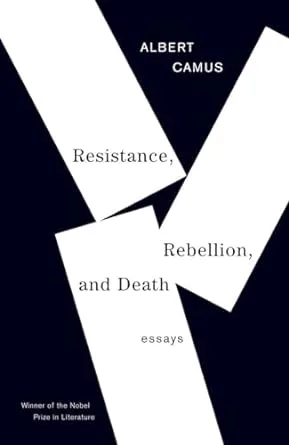
Albert Camus selected and edited these twenty-three essays to represent his engagement with the political crises of the mid-twentieth century. The collection documents his transition from a clandestine journalist for the French Resistance during the Nazi occupation to a vocal critic of postwar totalitarianism and capital punishment. The text presents specific arguments regarding the Algerian War, the Hungarian Uprising of 1956, and the moral contradictions of state-sanctioned execution. Camus applies his philosophical framework of the absurd to real-world oppression, arguing that the individual has a fundamental duty to reject cruelty regardless of ideological justifications.
This volume serves readers interested in the intersection of existential philosophy and political activism. Students of history and ethics read it to understand how a writer maintains personal integrity while navigating polarized conflicts like the Cold War. The reader gains a practical application of the rebel archetype, learning how to oppose injustice without succumbing to the nihilism or fanaticism that often follows social upheaval. It provides a clear blueprint for intellectual independence in times of collective violence.
- Published
- 1960
- Language
- EN
Quotes by Albert Camus
More →One must imagine Sisyphus happy.
The Myth of Sisyphus
The only way to deal with an unfree world is to become so absolutely free that your very existence is an act of rebellion.
The Rebel
In the depth of winter, I finally learned that within me there lay an invincible summer.
Return to Tipasa
More by Albert Camus
See all →
![விருந்தாளி [Virunthaali]](https://kwbjoqloympvbpzbrfja.supabase.co/storage/v1/object/public/scan-images/catalog/a43d16a5-61ca-4e1b-a3c7-f8cca75fe22d-full.webp)

Readers also enjoyed