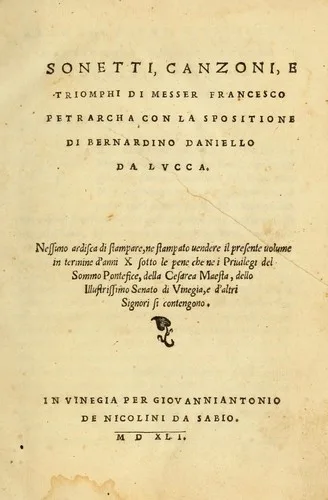
This collection of vernacular poems, widely known as the Canzoniere, documents the author’s lifelong fixation on a woman named Laura. Written throughout the mid-fourteenth century and formally printed in 1475, the 366 compositions include sonnets and canzoni that chart a psychological shift from erotic desire to Christian repentance. The text organizes these verses into two sections—those written during Laura’s life and those following her death from the plague. Petrarca uses the metaphor of the laurel tree to link his romantic longing with his desire for poetic fame.
Literary historians and students of linguistics read this work to observe the standardization of the Italian sonnet form and the transition from medieval to humanist thought. The book provides a technical blueprint for lyric poetry, demonstrating how specific rhyme schemes and rhythmic constraints can articulate complex internal conflict. Readers gain a precise understanding of the Petrarchan conceit, an influential rhetorical framework that shaped European literature for centuries. By studying these verses, one recognizes the origins of modern subjective expression and the linguistic foundations of the Tuscan dialect.
- Published
- 1475
- Language
- EN
More by Francesco Petrarca
See all →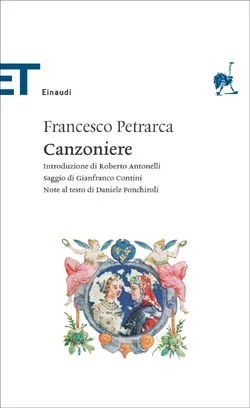
Readers also enjoyed