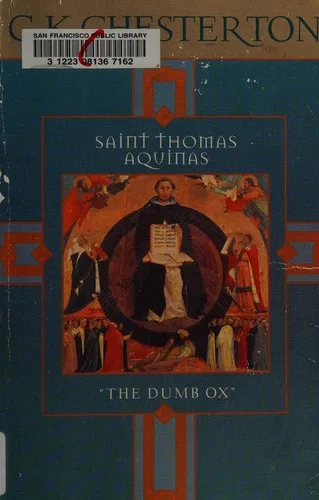
Saint Thomas Aquinas
In this biographical study, Gilbert Keith Chesterton examines the life and intellectual framework of the medieval philosopher and theologian Thomas Aquinas. The text contrasts the Dominican friar’s heavy-set, grounded presence with his complex metaphysical structures, specifically focusing on his synthesis of Aristotelian logic and Catholic doctrine. Chesterton charts the historical shift from the Platonic idealism of the earlier Church fathers to the realism of the Thomist system. He explains how Aquinas reconciled physical sensory experience with spiritual truth, asserting that the material world is a legitimate path toward understanding the divine creator.
This book serves students of medieval history and readers interested in the development of Western logic. Those who study the interaction between faith and reason use this text to understand how Thomism provides an alternative to both strict materialism and pure mysticism. Readers walk away with a clear grasp of the distinction between the Augustinian and Dominican traditions. The work provides a snapshot of the thirteenth-century University of Paris and the social disputes between the mendicant orders and the established secular clergy, placing abstract philosophical debates within their original political context.
- Published
- 1933
- Language
- EN