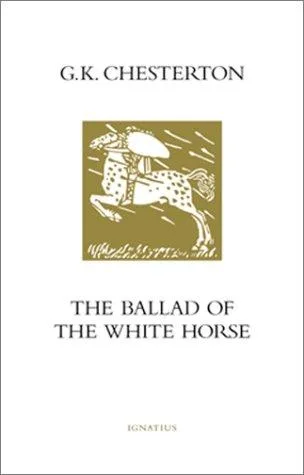
King Alfred of Wessex faces the total collapse of Christian England as Danish invaders destroy churches and reclaim the landscape for pagan gods. After a vision of the Virgin Mary, Alfred gathers a small, weary band of chieftains from Celtic, Roman, and Saxon backgrounds to make a final stand at the Battle of Ethandune. The narrative follows Alfred’s struggle against the nihilism of the Viking leaders, culminating in a defense of the Vale of the White Horse. Chesterton uses rhyming quatrains to contrast the humility of the Christian faith with the fatalism of the heathens.
Readers of epic poetry and medieval history turn to this work to see how philosophical conflict drives military action. It appeals to those interested in the preservation of Western culture and the specific theological defense of joy against despair. A reader finishes the poem with a stark understanding of the effort required to maintain civilization against recurring cycles of barbarism. The text provides a framework for viewing history not as an inevitable march of progress, but as a continuous struggle to keep the white horse clean of encroaching weeds.
- Published
- 1911
- Language
- EN