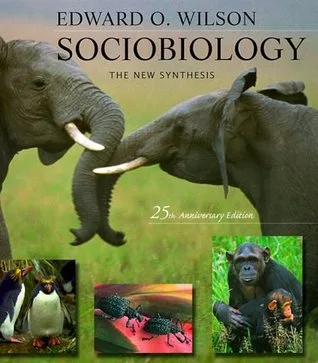
Edward O. Wilson presents a systematic framework for studying the biological basis of social behavior across the animal kingdom, from colonial invertebrates to vertebrate societies. The text integrates population biology, ethology, and genetics to explain how natural selection shapes altruism, parental care, and territoriality. Wilson proposes that complex social structures emerge as adaptive responses to environmental pressures, governed by the principles of kin selection and inclusive fitness. The final chapter extends these evolutionary theories to human behavior, suggesting that culture and ethics are influenced by underlying genetic frameworks.
Biologists, sociologists, and philosophers study this work to understand the evolutionary origins of cooperation and conflict. Readers gain a technical vocabulary for analyzing sociality through a Darwinian lens, moving past purely cultural explanations for group dynamics. The volume provides a foundation for the field of evolutionary psychology, offering specific models for how genetic inheritance interacts with social organization. It serves as a reference for those investigating how biological constraints define the limits of social evolution in both humans and animals.
- Published
- 1975
- Language
- EN
More by Edward O. Wilson
See all →




Readers also enjoyed