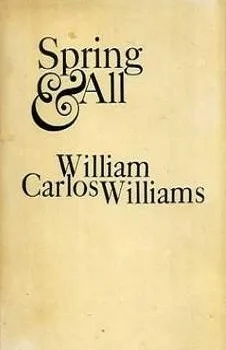
Spring and All functions as a hybrid manifesto where William Carlos Williams alternates between frantic prose and precise lyrics to challenge the dominance of traditional symbolism. He rejects the idea that a poem should represent another object, arguing instead that a poem is a self-contained physical reality. The text details the transition from winter to spring as a metaphor for the imaginative act, stripping away dead layers of European tradition. Williams presents a world of concrete things, such as the red wheelbarrow and the mud at the road’s edge, viewing them as immediate facts rather than metaphors.
Artistic practitioners and students of modernism read this work to understand the shift toward objectivism and the removal of ornamental language. It serves those interested in the technical construction of the sentence and the line, providing a template for how to observe the physical environment without sentimentality. Readers finish the book with a framework for seeing common objects as vital components of a living present. It offers a specific method for isolating sensory details and using linguistic economy to create a sense of direct contact with the external world.
- Published
- 1923
- Language
- EN
![The United States in Literature [with three long stories] -- Seventh Edition](https://kwbjoqloympvbpzbrfja.supabase.co/storage/v1/object/public/scan-images/catalog/f48162c6-7eb5-41ec-933b-9c4218489c7d-full.webp)