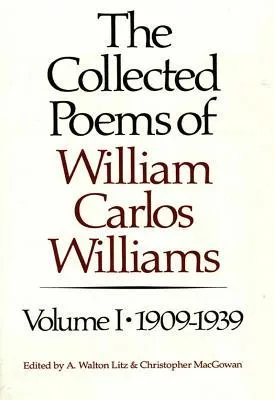
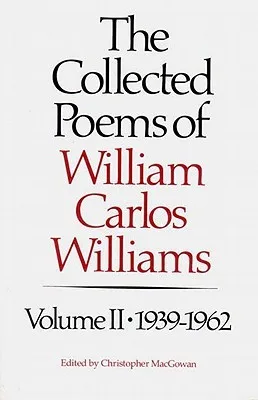
This collection compiles thirty years of Williams’ early verse, documenting his departure from European traditionalism toward an American idiom. The poems focus on the local textures of Northern New Jersey, documenting industrial landscapes, weeds, and domestic objects through the lens of Imagism and Objectivism. Williams utilizes brief lines and variable rhythm to present visual snapshots, such as the famous red wheelbarrow or a bowl of plums, without relying on abstract symbolism. The text establishes his "no ideas but in things" philosophy, prioritizing the physical properties of the subject over metaphysical interpretation.
Poets and students of modernism read this volume to study the technical evolution of free verse and the mechanics of precision. The work serves as a manual for those interested in how everyday speech and mundane environments can be structured into formal art. Readers walk away with a specific method for observing the material world and an understanding of how Williams rejected classic meter to capture the particular pace of twentieth-century American life.
- Published
- 1951
- Language
- EN
![The United States in Literature [with three long stories] -- Seventh Edition](https://kwbjoqloympvbpzbrfja.supabase.co/storage/v1/object/public/scan-images/catalog/f48162c6-7eb5-41ec-933b-9c4218489c7d-full.webp)