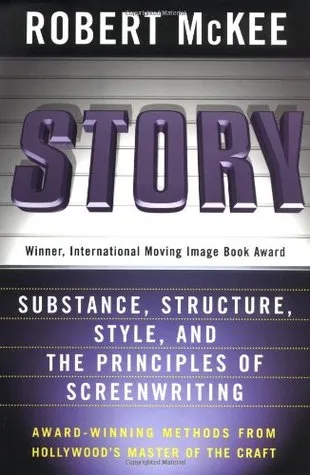
Story: Substance, Structure, Style, and the Principles of Screenwriting
Robert McKee presents a formalist approach to narrative construction, arguing that story is an instrument of emotional meaning rather than a mere sequence of events. He dissects the specific components of the classical design, focusing on the inciting incident, progressive complications, the crisis, the climax, and the resolution. The text details the relationship between character and plot, asserting that true character is revealed through the internal and external choices made under increasing pressure. McKee categorizes stories into a spectrum ranging from the Archplot to the Miniplot and Antiplot, while emphasizing the mastery of the "turning point" to sustain audience interest.
Screenwriters, playwrights, and novelists study this manual to understand the archetypal patterns that drive cinematic energy. Readers gain a technical vocabulary for analyzing why a scene succeeds or fails and learn how to navigate the gap between a character’s expectations and reality. The book provides a framework for identifying a story’s controlling idea and helps writers avoid clichés by focusing on the logic of cause and effect. By following these principles, writers move toward a systematic method for organizing human experience into a coherent dramatic structure.
- Published
- 1997
- Language
- EN