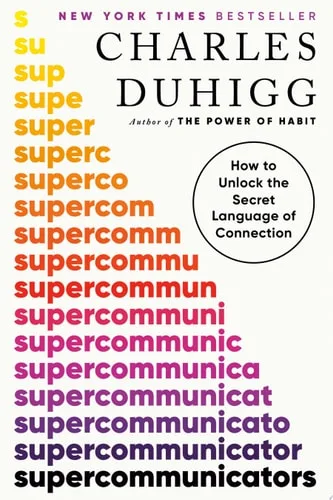
Charles Duhigg identifies three distinct types of conversations: practical decision-making, emotional connection, and social identity. The book explains that successful interaction requires participants to recognize the specific category of a discussion and match their communication style accordingly. Using examples from NASA recruitment and CIA operations, Duhigg details how supercommunicators surface hidden needs and respond to non-verbal cues. He breaks down technical skills like looping for understanding, which involves repeating what a speaker said to prove comprehension and build trust.
Managers, negotiators, and individuals looking to resolve interpersonal conflict read this to gain tactical control over social exchanges. Readers learn to identify if a speaker wants a solution, empathy, or validation before they offer advice. This guide provides a framework for turning tense debates into collaborative learning opportunities. By the end, the reader has a specific toolkit for asking deep questions that bypass small talk to find common ground in professional and private settings.
Insights from Supercommunicators
“We need to be on the same page, at the same time.”
Most people miss the real conversation. You have to match their energy whether they are venting or solving. If you don't sync up, you're just talking to yourself.
“We all contain multitudes.”
Identity is a minefield in every discussion. We all have different versions of ourselves. You have to figure out which version you are talking to right now.
“Supercommunicators are people who have learned these skills.”
The best communicators aren't born with a special gift. They just pay closer attention to the tiny cues everyone else ignores.
Our brains literally sync up during a good chat. Blood flow and heart rates start to mirror each other. It is a biological event, not just talk.
- Published
- 2024
- Publisher
- Random House Digital Inc.
- ISBN
- 9780593243930
- Language
- EN