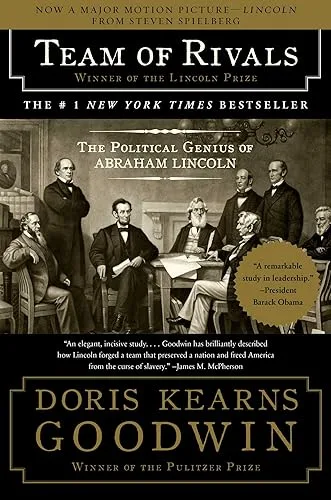
Doris Kearns Goodwin examines Abraham Lincoln’s political genius through his decision to appoint his fiercest electoral opponents to his cabinet. The narrative tracks the 1860 Republican primary race, where the underdog Lincoln defeated established veterans William H. Seward, Salmon P. Chase, and Edward Bates. Instead of purging these adversaries, Lincoln integrated them into his administration during the American Civil War. This strategy turned a fractured group of ambitious rivals into a cohesive unit that managed wartime logistics, foreign diplomacy, and the abolition of slavery. The book details Lincoln’s specific methods for building consensus, soothing large egos, and utilizing the unique intellectual strengths of his subordinates to preserve the Union.
This history is written for students of leadership and political science who want to understand how a leader manages internal dissent. Readers gain a practical perspective on emotional intelligence and the tactical advantages of recruiting critics rather than sycophants. The work provides a blueprint for governance in times of national crisis, demonstrating how a secure leader can leverage conflicting perspectives to improve decision-making. Those interested in the 19th-century United States walk away with a granular understanding of the interpersonal dynamics that shaped the Emancipation Proclamation and the conclusion of the war.
Insights from Team of Rivals
“I had no right to deprive the country of their services.”
Lincoln put his biggest enemies in his cabinet. He knew their egos were huge but their talents were bigger. He valued the country over his own comfort.
“He is the best of us.”
Seward spent years hating Lincoln for taking his spot. Then he worked for him and realized Lincoln was the better man. It takes real grace to admit you were wrong about a rival.
“I laugh because I must not weep.”
Lincoln used humor to handle crushing stress. He told jokes when things were falling apart. It kept him from breaking.
“I have not much of a capacity to entertain resentment.”
Forgiveness was his actual political strategy. He didn't hold grudges because he didn't have the time. He just wanted to get the job done.
- Published
- 2005
- Language
- EN
More by Doris Kearns Goodwin
See all →
Readers also enjoyed