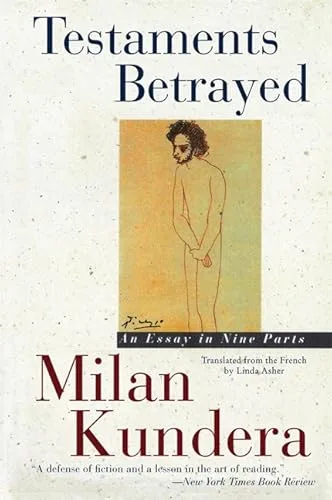
Milan Kundera examines the evolution of the European novel as a unique art form, arguing that its spirit of irony and ambiguity is under threat. He analyzes the historical shift from the playful freedom of Rabelais and Cervantes to the modern moralizing that seeks to judge rather than understand. Through specific critiques of Stravinsky’s music, Kafka’s posthumous legacy, and the nuances of literary translation, Kundera demonstrates how "betrayals" occur when editors or critics impose their own biases onto a creator’s original intention. He insists that a novel's value lies in its refusal to offer absolute truths or political slogans.
This book is intended for students of literature and practitioners of the arts who seek to protect the autonomy of creative work. Readers gain a framework for recognizing how biographical gossip and ideological interpretations can obscure the actual aesthetic Achievement of an author. They walk away with a deeper comprehension of why maintaining the formal integrity of a text is more important than satisfying the public's curiosity about a writer's life. It serves as a study in defending the individual voice against collective misunderstanding.
- Published
- 1993
- Language
- EN
More by Milan Kundera
See all →
Readers also enjoyed