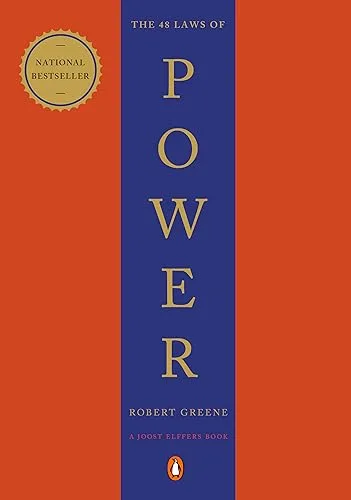
Robert Greene’s manual distills three thousand years of social history into forty-eight distinct instructions for gaining and maintaining influence. Drawing on the tactical philosophies of Sun Tzu, Machiavelli, and various historical courtiers, the text presents power as an amoral game played through strategic concealment and psychological leverage. Each chapter explains a specific rule, such as never outshining the master, concealing intentions, or crushing enemies totally. Greene uses biographical vignettes about figures like Napoleon and P.T. Barnum to demonstrate how specific maneuvers operate in competitive environments while warning of the risks involved in ignoring these social dynamics.
This book serves individuals operating within corporate hierarchies, political circles, or high-stakes social environments where office politics dictate success. Readers study these laws to recognize when they are being manipulated and to learn the mechanics of reputation management and defensive posture. The audience gains a framework for analyzing human behavior through the lens of self-interest and calculated action. By the end, a reader understands how to use silence as a tool, how to cultivate an air of unpredictability, and how to navigate the hidden power structures that influence professional advancement.
Outward-looking, growth-minded and clear-cut; a moderate read.
Best for readers like The Practical Optimizer. Which reader are you?
Insights from The 48 Laws of Power
“Always say less than necessary.”
Saying less makes you look more sophisticated. People start filling the silence with their own secrets while you just sit there. Silence is a weapon.
“Use the surrender tactic: transform weakness into power.”
Total surrender is actually a power move. It gives you time to recover while your enemy gets bored. Don't die for a lost cause.
“Never outshine the master.”
Stop trying to outshine your boss. It makes them feel insecure and they will quietly crush you for it. Just make them look brilliant instead.
“Do not build fortresses to protect yourself.”
Isolation is a death sentence for your influence. You need to be in the middle of the crowd to see the daggers coming. A fortress is just a fancy prison.
- Published
- 1999
- Language
- EN