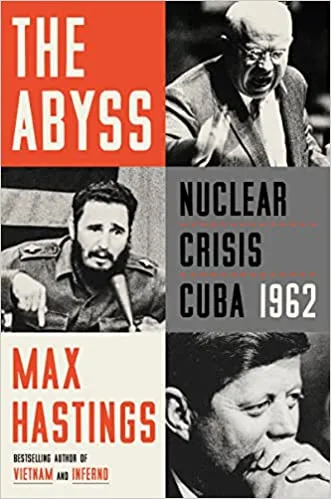
Max Hastings examines the thirteen days of the Cuban Missile Crisis by focusing on the friction between political leadership and military bureaucracy. He depicts Nikita Khrushchev’s reckless gamble to deploy R-12 ballistic missiles as a response to American Jupiter missiles in Turkey and the perceived vulnerability of the Castro regime. The book tracks the failure of intelligence agencies on both sides and the narrow avoidance of escalation through the perspectives of ordinary civilians, field commanders, and the Kennedy administration. Hastings argues that pure luck, rather than masterful diplomacy, prevented a global thermonuclear exchange.
Students of twentieth-century geopolitics and Cold War strategy read this to understand the practical breakdown of command and control during a high-stakes standoff. The text provides a technical look at the logistical chaos of the Soviet deployment and the psychological pressure on decision-makers. Readers walk away with a detailed timeline of the miscommunications that nearly triggered the Single Integrated Operational Plan. It offers a sobering assessment of how governmental paranoia and flawed assumptions drive international brinkmanship toward the edge of extinction.
- Published
- 2022
- Language
- EN
More by Max Hastings
See all →
Readers also enjoyed