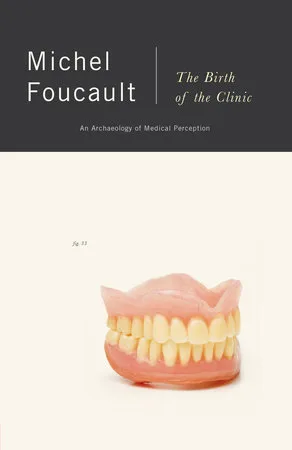
The Birth of the Clinic: An Archaeology of Medical Perception
Michel Foucault traces the shift in medical knowledge that occurred at the end of the eighteenth century, marking the transition from "classificatory medicine" to the modern "clinical gaze." He argues that the emergence of the clinic and the practice of pathological anatomy redefined the relationship between visible symptoms and invisible disease. By analyzing the work of physicians like Xavier Bichat, Foucault demonstrates how the opening of corpses allowed doctors to spatialize illness within the body. This shift transformed the patient from a person with a story into an object of scientific observation, institutionalizing the medical focus on the corpse as the ultimate source of anatomical truth.
Historians, sociologists, and medical professionals read this text to understand the structural origins of modern hospital systems and diagnostic frameworks. It provides a technical analysis of how language and institutional power dictate what is considered healthy or pathological. Readers walk away with a specific vocabulary for discussing the surveillance of bodies and the historical development of the expert authority exercised by the medical profession. The book offers a precise methodology for examining how physical observation replaced philosophical speculation in the treatment of human illness.
- Published
- 1963
- Language
- EN