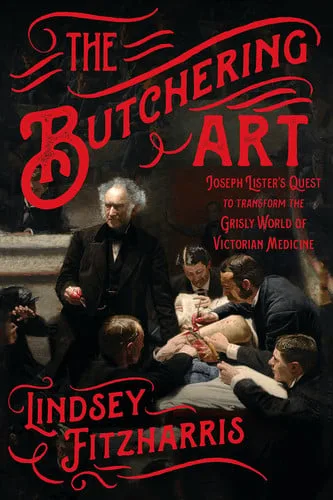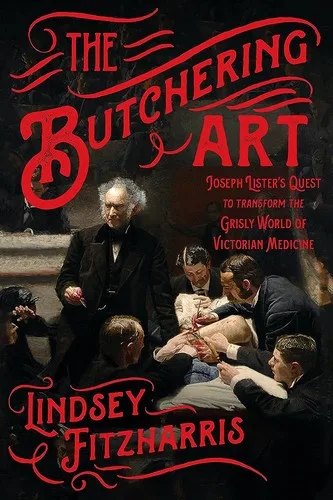
The Butchering Art reconstructs the gruesome reality of Victorian medicine, focusing on Joseph Lister’s campaign to introduce antisepsis into nineteenth-century hospitals. Before Lister, surgeons operated in blood-stained aprons using unwashed tools, as the medical establishment believed that miasma, or "bad air," caused infection rather than invisible pathogens. The narrative follows Lister’s transition from a curious student to a persistent researcher who applied Louis Pasteur’s germ theory to the operating theater. By utilizing carbolic acid to disinfect wounds and instruments, Lister challenged the era’s high mortality rates caused by hospital gangrene and septicemia.
Readers interested in the history of science and the evolution of surgical technology will find a detailed account of how sterile environments became a medical standard. The text appeals to those who enjoy technical descriptions of early anatomy and the logistical challenges of pre-anesthetic surgery. A reader finishes the book with a clear understanding of the transition from the era of "heroic" surgery, defined by speed and gore, to a modern, evidence-based discipline. It provides a factual foundation for how microbial science fundamentally altered public health and surgical safety.
- Published
- 2017
- Language
- EN