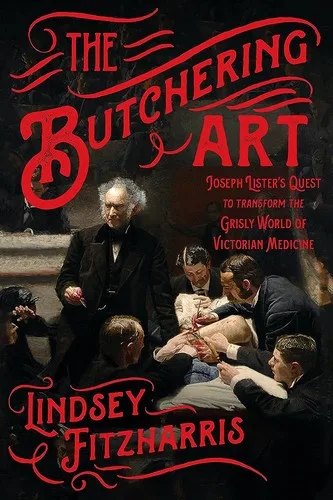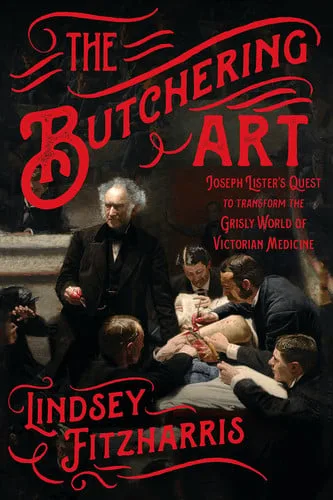
The Butchering Art: Joseph Lister's Quest to Transform the Grisly World of Victorian Medicine
In the mid-nineteenth century, hospitals were breeding grounds for infection where surgeons operated in blood-stained aprons and speed was valued over hygiene. Lindsey Fitzharris charts the career of Joseph Lister, a British surgeon who sought to solve the mystery of post-operative putrefaction and high mortality rates. Working from Louis Pasteur’s findings on microbes, Lister developed the use of carbolic acid as a disinfectant to kill invisible pathogens. The narrative details his experiments with chemical barriers and his persistent struggle against a medical establishment that dismissed the existence of germs.
History enthusiasts and science readers find here a detailed record of the shift from traditional bloodletting to modern sterile surgery. The text provides a clinical look at early anesthesia, the physical layout of Victorian operating theaters, and the grim reality of compound fractures before antisepsis. Readers finish the book with a technical understanding of how germ theory was physically applied to medical instruments and wounds. It offers a survival history of human medicine that emphasizes the slow, difficult rejection of outdated anatomical theories in favor of evidence-based practice.
Insights from The Butchering Art: Joseph Lister's Quest to Transform the Grisly World of Victorian Medicine
“A surgeon’s success was often measured by the speed of his blade.”
Surgeons used to take pride in their blood-stained aprons. They thought the old blood showed how much experience they had. It was actually just spreading death to every new patient.
“The hospital was a house of death.”
Before Lister, hospitals were basically death traps where germs ran wild. People actually preferred getting surgery at home on their kitchen tables. It felt safer than the crowded wards.
“Lister’s colleagues were his greatest obstacles.”
Lister had to fight his own peers to get them to just wash their hands. Most doctors thought his ideas about invisible microbes were a total joke. They mocked him for years.
“The surgical theater was a place of high drama and deep dread.”
Operations were once a gruesome public spectacle held in theaters. Crowds watched surgeons work as fast as possible to minimize the screaming. Speed mattered more than safety.
- Published
- 2017
- Publisher
- Scientific American / Farrar, Straus and Giroux
- ISBN
- 9780374117290
- Language
- EN