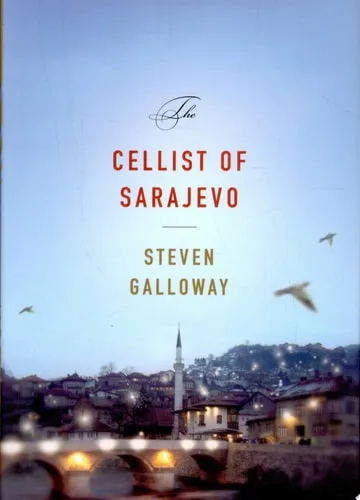
Set in the besieged city of Sarajevo, the narrative follows three civilians navigating a landscape of sniper fire and shellings. After a mortar attack kills twenty-two people waiting for bread, an unnamed cellist resolves to play Albinoni’s Adagio in G Minor at the site for twenty-two consecutive days. Arrow, a gifted counter-sniper, is assigned to protect him from enemy assassins. Meanwhile, Kenan risks his life to fetch water for his family, and Dragan searches for a sense of normalcy despite the pervasive threat of death and starvation.
Readers interested in the psychological realities of urban warfare will find a technical look at how conflict strips away civic infrastructure and personal identity. The book attracts those seeking a study of individual agency within a suffocating collective trauma. It provides a detailed examination of how aesthetic beauty and small acts of defiance function as tools for mental endurance. Readers finish the text with a clear understanding of the thin line between survival and the preservation of one’s internal moral character during an extended siege.
Inward-looking and thought-provoking; a moderate read.
Best for readers like The Empathetic Explorer. Which reader are you?
Insights from The Cellist of Sarajevo
“He will do this every day for twenty-two days, a day for each person killed.”
Every day the cellist sits in a crater to play for the dead. It makes you realize that beauty is a form of resistance when everything is falling apart.
“He is a man who carries plastic bottles and his life is at the mercy of others.”
Kenan risks his life just to get water for his family. It's wild how the most basic chores become acts of bravery during a war.
“She doesn't want to kill him because he's a soldier. She wants to kill him because he's a person.”
Arrow has to decide if she will kill to preserve her own humanity. She realizes that hating the enemy might actually be a trap.
“The city is no longer a place he knows. It is a place he is trying to survive.”
Dragan spends so much time waiting to cross a street. It shows how fear can make a city feel like a series of dangerous islands.
- Published
- 2008
- Publisher
- Riverhead Hardcover
- ISBN
- 9781594489860
- Language
- EN