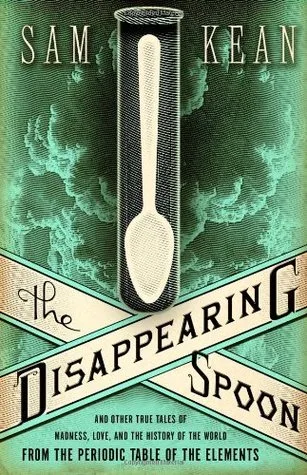
The Disappearing Spoon: And Other True Tales of Madness, Love, and the History of the World from the Periodic Table of the Elements
Sam Kean organizes the history of the world through the chemical elements, moving beyond the sterile rows of the periodic table to reveal the human chaos behind scientific discovery. He details how gallium’s low melting point creates the title’s prank spoon, how nitrogen fueled both the green revolution and explosives, and how mercury poisoning influenced early medicine. The narrative spans the race to isolate rare earth metals, the geopolitical battles over coltan in the Congo, and the creative rivalries between researchers like Glenn Seaborg and the chemists of the Soviet Union.
Students and science enthusiasts read this book to see the physical sciences integrated with human biography and political history. It functions as a series of interconnected anecdotes that strip away technical jargon in favor of storytelling. Readers finish the book with a mental map of how specific atoms shaped specific historical events, such as why the Big Bang produced only hydrogen and helium or why lithium affects the human brain. It replaces memorized atomic weights with concrete associations between elements and the people who discovered or exploited them.
Outward-looking and clear-cut; a moderate read.
Best for readers like The Evidence Seeker. Which reader are you?
- Published
- 2010
- Language
- EN
More by Sam Kean
See all →
Books like The Disappearing Spoon: And Other True Tales of Madness, Love, and the History of the World from the Periodic Table of the Elements
See all 12 →