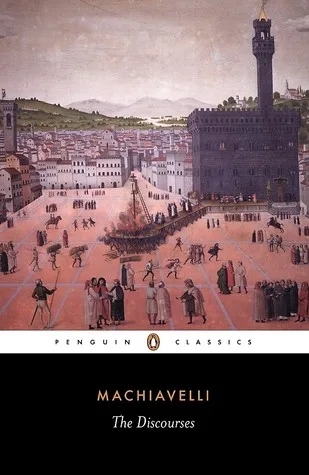
Niccolò Machiavelli uses the history of Ancient Rome, specifically the first ten books of Livy, to construct a manual on republican governance. He argues that a stable state requires a system of checks and balances where the friction between the nobility and the common people produces liberty rather than chaos. The text outlines the necessity of civic religion, the superiority of citizen militias over mercenaries, and the periodic need to return a state to its founding principles through violent or legal purging. Machiavelli concludes that a republic is more resilient than a principality because it can adapt to changing times by drawing on the diverse talents of its entire citizenry.
This book serves political theorists, historians, and leaders interested in the mechanics of institutional longevity. Readers learn to identify the structural weaknesses that lead to corruption and how to design laws that channel individual ambition into public service. The text provides a framework for understanding how collective freedom is maintained through conflict and why the preservation of a state often demands harsh actions that traditional morality might condemn. Undergoing this analysis helps a reader recognize the cyclical nature of political decay and renewal.
Deep and outward-looking; a moderate read.
Best for readers like The Deep Diver. Which reader are you?
- Published
- 1517
- Language
- EN