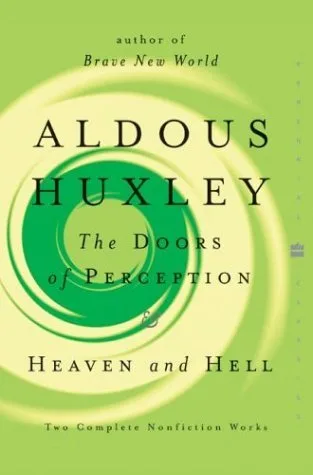
In this collection of essays, Aldous Huxley documents his 1953 experiments with mescaline under clinical supervision. He argues that the human brain functions as a reducing valve, filtering out a vast reality to focus on biological survival. By chemically inhibiting this valve, he observes a shift from conceptual thought to direct sensory experience, where ordinary objects like flowers or chair legs gain intense visual significance. In the second essay, he analyzes the aesthetic similarities between drug-induced states, religious visions, and artistic masterpieces, categorizing how light and color influence the subconscious mind.
This book serves researchers of consciousness, art historians, and psychologists interested in the chemical origins of spiritual perception. Readers gain a technical framework for understanding how physical changes in the body alter the interpretation of external reality. It provides a bridge between neurological function and the visionary experiences documented throughout history in folklore and scripture. By the final page, the reader understands the relationship between aesthetic appreciation and the biological structures that normally limit human awareness.
Deep, inward-looking and open-ended; a moderate read.
Best for readers like The Literary Connoisseur. Which reader are you?
- Published
- 1956
- Language
- EN