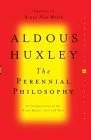
Aldous Huxley identifies a shared metaphysical core within the world’s religious traditions, ranging from the Upanishads and Tao Te Ching to the writings of Christian and Islamic mystics. He argues that a single, universal reality exists beneath these diverse doctrines, accessible only through direct spiritual intuition. The text organizes excerpts from historical sages to illustrate four fundamental pillars: the existence of a divine Ground, the human capacity to perceive this reality, the dual nature of the ego, and the ultimate purpose of life as unitive knowledge of the divine.
Philosophers and students of comparative religion read this book to understand the commonalities between Eastern and Western thought without the interference of institutional dogma. It appeals to those seeking a rigorous intellectual framework for mysticism and personal ethics. The reader walks away with a synthesis of perennial wisdom that emphasizes self-transcendence and the removal of the individual will. It provides a technical map for navigating the relationship between the finite human mind and the infinite reality it inhabits.
Deep, inward-looking and contemplative; a moderate read.
Best for readers like The Mindful Reader. Which reader are you?
- Published
- 1945
- Language
- EN