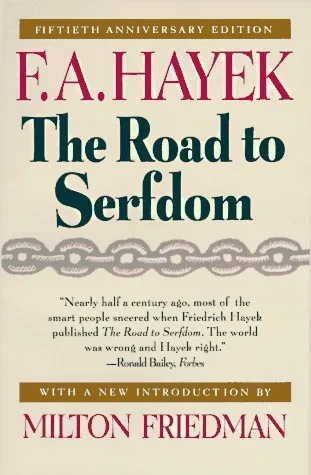
Friedrich A. Hayek argues that the development of civilization stems from an "extended order" of human cooperation that evolved through tradition rather than deliberate conscious design. He posits that market mechanisms and private property are spontaneous products of cultural evolution that allow for the efficient use of dispersed knowledge. The central thesis identifies the socialist ambition to centrally plan an economy as a fatal conceit—the delusional belief that human reason can master and manipulate complex social processes that are fundamentally beyond the grasp of any single intellect.
This book serves students of political economy, historians, and practitioners in finance who seek to understand the origins of institutional stability. Readers learn how competition acts as a discovery procedure for information that is otherwise inaccessible to government authorities. By studying the contrast between instinctive tribal behavior and the abstract rules of the modern macro-economy, the reader gains a framework for evaluating the limits of state intervention and the importance of inherited customs in maintaining global trade networks.
- Published
- 1988
- Language
- EN