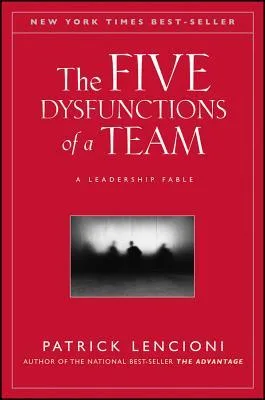
The Five Dysfunctions of a Team
Patrick Lencioni uses a fictional narrative about a struggling technology firm and its new CEO, Kathryn Petersen, to illustrate why groups often fail to coordinate. He identifies five specific behavioral hurdles that prevent collective success: absence of trust, fear of conflict, lack of commitment, avoidance of accountability, and inattention to results. The model functions as a pyramid, suggesting that without a foundation of vulnerability-based trust, team members cannot engage in productive ideological debate or buy into group decisions. This chain reaction typically leads to low standards and the prioritization of individual status over team goals.
Corporate managers, department heads, and project leads use this book to diagnose internal friction and improve output. It provides a blueprint for moving away from artificial harmony and toward active cooperation. Readers finish the text with a practical assessment tool to evaluate their own units and a series of exercises designed to build clarity. The book offers a method for establishing clear goals and holding peers responsible for deadlines, providing a framework for reducing turnover and increasing overall efficiency in professional settings.
- Published
- 2002
- Language
- EN
More by Patrick Lencioni
See all →