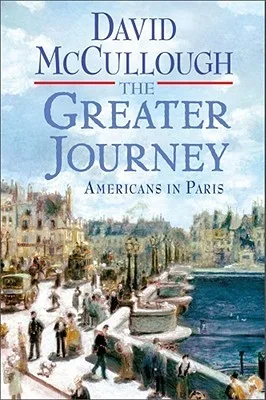
From 1830 to 1900, a significant migration of American intellectuals sought professional refinement in Paris. David McCullough chronicles the lives of figures like portraitist John Singer Sargent, writer James Fenimore Cooper, and medical student Elizabeth Blackwell as they navigated French institutions. The narrative details how Samuel Morse’s time at the Louvre preceded his telegraphic innovations and how sculptor Augustus Saint-Gaudens developed his technique under French masters. These individuals encountered political instability, including the 1871 Siege of Paris, while absorbing the city's advanced standards in anatomy, engineering, and fine arts.
Historians and art enthusiasts read this work to understand the specific European influences that shaped nineteenth-century American culture. Readers learn how the rigorous French educational system provided the technical foundation for American landmarks, such as the Statue of Liberty and the Brooklyn Bridge. The text functions as a record of intellectual exchange, showing how exposure to Parisian galleries and medical schools transformed provincial American students into international leaders. One gains a clear view of how these expatriates returned home to establish the museums and hospitals that defined a maturing United States.
- Published
- 2011
- Language
- EN