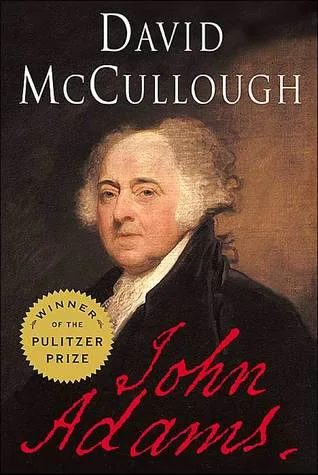
David McCullough chronicles the life of the second American president, focusing on his intellectual rigor and his central role in the Continental Congress. The narrative tracks Adams from his legal practice in Massachusetts through his diplomatic missions in Europe and his single term in the White House. It emphasizes his long-standing partnership and correspondence with his wife, Abigail Adams, which served as his primary emotional and political support. The book examines his rivalry and eventual reconciliation with Thomas Jefferson, detailing their opposing views on federal power and the French Revolution.
Readers of political history and presidential biographies turn to this work to understand the human friction behind the founding of the United States. It appeals to those interested in the internal conflicts of the Federalist era and the personal sacrifices required by early diplomatic service. A reader walks away with a clear picture of Adams’s stubborn integrity, his fear of social disorder, and the specific political navigation required to maintain American neutrality during the war between France and Britain.
Insights from John Adams
“Jefferson survives.”
The rivalry with Jefferson was deeply personal and lasted decades. They were total opposites who couldn't stay away from each other.
“I cannot say that I think you very generous to the Ladies.”
Adams and Abigail were basically partners in every decision. Her letters show she was his smartest advisor during the revolution.
“Facts are stubborn things.”
Adams defended the British soldiers after the Boston Massacre because he believed in the law. He risked his entire reputation for a fair trial.
He lived in a tiny, cold house in Quincy even after being president. He was a farmer at heart who just happened to build a nation.
- Published
- 2001
- Publisher
- Simon and Schuster
- ISBN
- 9780743218290
- Language
- EN
More by David McCullough
See all →

Readers also enjoyed